
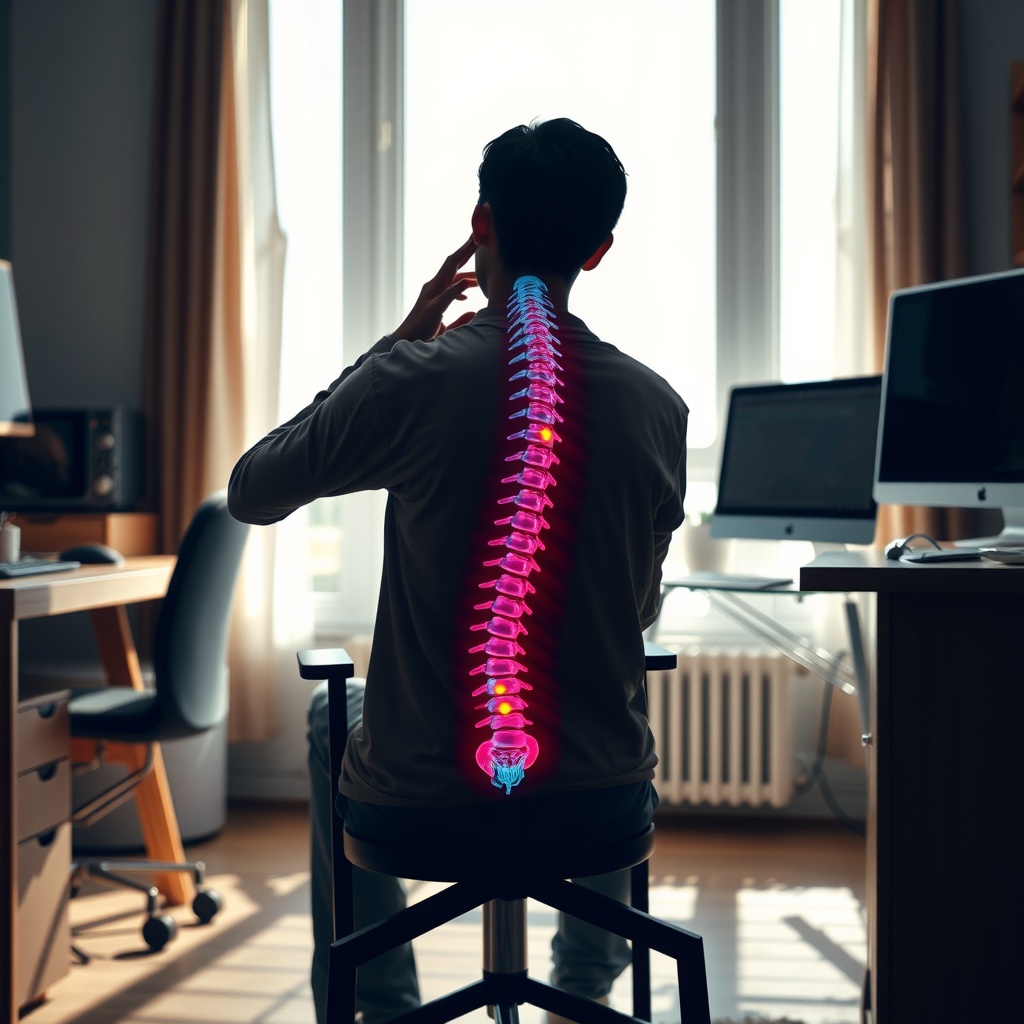
Common daily habits, like slouching and prolonged sitting, can seriously harm your spine. When you lean forward or sit for hours, you strain muscles and disrupt natural curvature. Lifting improperly and sleeping on your stomach can also lead to misalignment and discomfort. Stress adds tension, worsening posture and pain. To keep your spine healthy, it’s essential to adopt better habits. Discover more insights on how to support your spine effectively.
Key Takeaways
- Slouching while sitting or standing strains vertebrae and muscles, leading to misalignment and chronic pain.
- Prolonged sitting weakens crucial muscles and disrupts spinal curvature, increasing discomfort.
- Improper lifting techniques, like bending at the waist, can cause significant spinal strain and injury.
- Sleeping on your stomach misaligns the neck and spine, leading to discomfort and pain.
- High stress levels create muscle tension that negatively impacts posture and spinal health.
How Poor Posture Affects Your Spine

When you slouch or hunch over, your spine pays the price. Poor posture puts unnecessary strain on your vertebrae and the surrounding muscles. Instead of maintaining its natural curve, your spine struggles to support your weight, leading to discomfort and pain.
You mightn’t notice it at first, but over time, this misalignment can cause long-term issues, like herniated discs or chronic back pain.
Your muscles have to work harder to keep you upright, which can lead to fatigue and tension. If you’re constantly leaning forward, you might also experience neck pain, as your head shifts out of alignment.
This imbalance can even affect your breathing, as a compressed chest restricts lung capacity. By being mindful of your posture, you can help alleviate these problems.
Simple adjustments, like sitting up straight or using ergonomic furniture, can make a big difference in your spinal health.
Why Prolonged Sitting Harms Your Spine
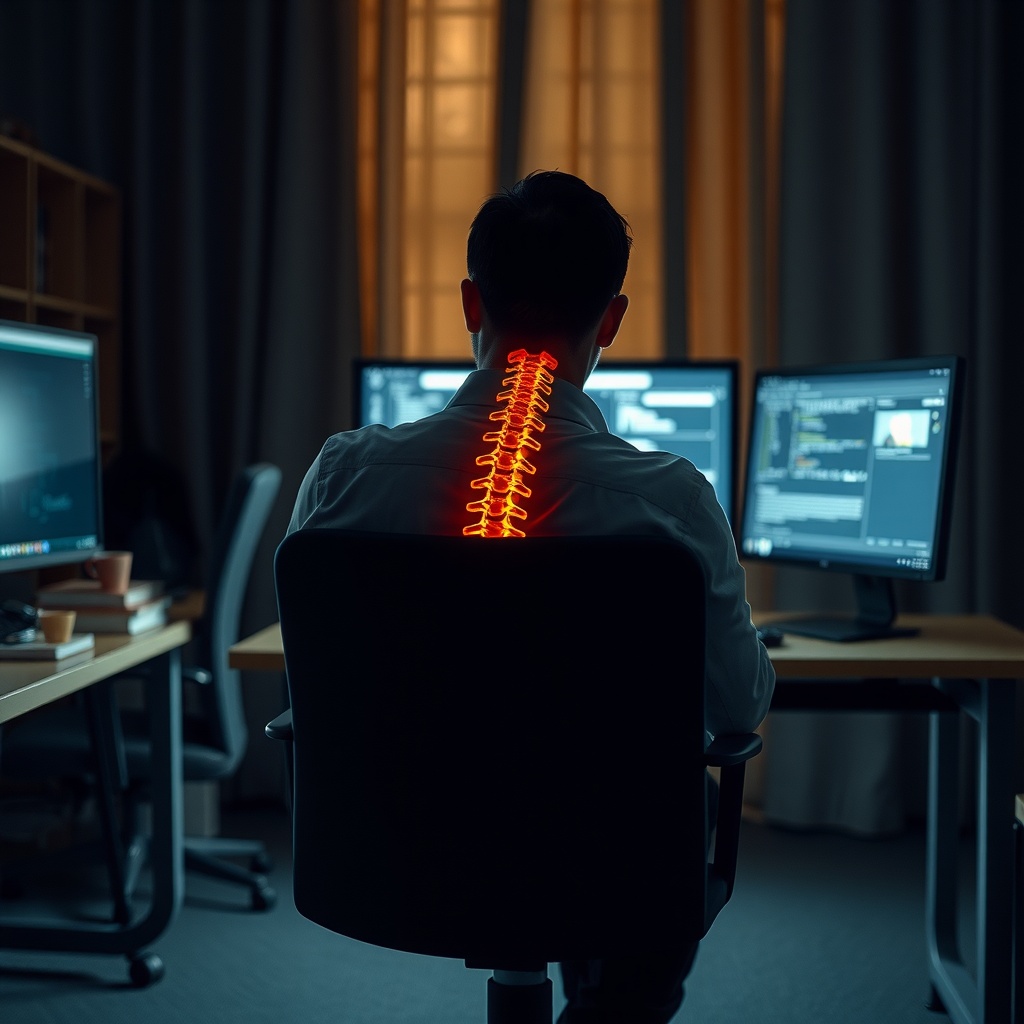
Although you might think sitting provides a break for your back, prolonged sitting can actually wreak havoc on your spine. When you sit for extended periods, your muscles weaken and your spine loses its natural curvature. This leads to increased pressure on your intervertebral discs, which can cause pain and discomfort. Your hip flexors tighten, and your glutes weaken, making it harder for your body to support itself properly.
Moreover, slouching in your chair can further exacerbate these issues, creating a cycle of discomfort. You mightn’t notice these effects immediately, but over time, they can contribute to chronic back pain and other spinal issues.
Slouching in your chair can intensify discomfort, leading to chronic back pain and spinal issues over time.
It’s essential to break up long sitting sessions with short walks or stretches. By doing so, you’ll keep your spine healthy and reduce the risk of long-term damage.
Prioritize movement to maintain your spinal health and overall well-being.
Correct Lifting Techniques for Spinal Health
Mastering correct lifting techniques is essential for protecting your spine. When you lift, always bend your knees and keep your back straight. This method reduces strain on your spine and helps maintain proper alignment. Here’s a quick reference:
| Do’s | Don’ts |
| Keep the load close to your body | Twist your torso while lifting |
| Use your legs to lift | Bend at the waist |
| Maintain a neutral spine | Lift with a rounded back |
How Sleeping Positions Affect Your Spine?
Your sleeping position plays an essential role in the health of your spine, as the way you rest can either support or strain your alignment.
If you sleep on your back, it can promote a neutral spine position, reducing pressure on your vertebrae. However, if you prefer to sleep on your stomach, this can lead to neck strain and misalignment, as your head must turn to breathe, twisting your spine.
Side sleeping is often recommended, especially if you use a supportive pillow that keeps your neck aligned with your spine. You might also consider placing a pillow between your knees to further enhance alignment in this position.
Remember, the right mattress matters too; it should provide support without being too firm or too soft.
How Footwear Choices Impact Spinal Alignment
Choosing the right footwear is essential for maintaining proper spinal alignment, as the shoes you wear can greatly influence your posture and overall body mechanics. Poorly designed shoes, like high heels or those lacking arch support, can throw off your balance and lead to misalignment in your spine.
When your feet aren’t properly supported, it creates a ripple effect that impacts your knees, hips, and back. This misalignment can lead to discomfort and even chronic pain over time. Opt for shoes that provide adequate cushioning and support, especially if you spend long hours on your feet.
Also, consider alternating your footwear to avoid repetitive strain. By making thoughtful choices about what you wear on your feet, you can notably improve your spinal health and overall well-being.
A little attention to your footwear can go a long way in promoting better posture and reducing the risk of spinal issues.
How Stress Affects Your Spine Health
Even with the right footwear, stress can still take a toll on your spine health. When you’re stressed, your body tenses up, causing your muscles to contract and pull on your spine. This tension can lead to poor posture, which places extra strain on your spinal discs and joints. Over time, this can result in chronic pain and discomfort.
Additionally, stress can disrupt your sleep, making it harder for your body to recover. Lack of sleep can weaken your immune system and exacerbate any existing issues with your spine.
You might also find yourself more likely to engage in unhealthy habits, like slouching or sitting for long periods, further damaging your spinal alignment.
Why Moving and Stretching Matter for Your Spine
Moving and stretching play an essential role in maintaining spinal health. When you engage in regular movement, you enhance blood flow to your spine, supplying crucial nutrients and oxygen. This circulation helps keep your spinal discs healthy and reduces stiffness.
Stretching, on the other hand, improves flexibility, allowing your muscles and ligaments to support your spine more effectively.
Incorporating movement into your daily routine can prevent the buildup of tension that often leads to pain. Simple actions like walking, bending, or even rotating your torso can help maintain proper alignment.
Stretching can counteract the effects of prolonged sitting or standing, easing discomfort and promoting a better range of motion.
Creating a Spine-Friendly Workspace
Since you spend a considerable amount of time at your workspace, creating a spine-friendly environment is crucial for your overall well-being.
Start by choosing an ergonomic chair that supports your lower back. Your feet should rest flat on the floor, with your knees at a 90-degree angle. Adjust your desk height so that your elbows are also at a right angle when typing.
Position your computer monitor at eye level to avoid straining your neck. If you use a laptop, consider a stand or external keyboard to achieve this height.
Keep frequently used items within arm’s reach to prevent twisting or bending.
Don’t forget about lighting! Confirm your workspace is well-lit to reduce eye strain, which can lead to poor posture.
Finally, take regular breaks to stand, stretch, and move around. These simple adjustments can greatly improve your spinal health and comfort throughout the day.
Frequently Asked Questions
Can Emotional Stress Lead to Physical Spinal Issues?
Yes, emotional stress can lead to physical spinal issues. When you’re stressed, your muscles tense up, which can strain your spine. Managing stress through relaxation techniques can help alleviate these physical manifestations and maintain spinal health.
How Often Should I Take Breaks From Sitting?
You should take breaks from sitting every 30 to 60 minutes. Stand, stretch, or walk for a few minutes. This keeps your spine healthy and helps maintain good posture throughout your day.
What Are the Signs of Spinal Misalignment?
You might notice signs of spinal misalignment through persistent back pain, neck stiffness, headaches, or reduced mobility. If you’re experiencing any of these symptoms, it’s wise to consult a healthcare professional for assessment.
Is There a Specific Diet for Spinal Health?
While there isn’t a specific diet for spinal health, focus on anti-inflammatory foods like fruits, vegetables, whole grains, and healthy fats. Staying hydrated and maintaining a balanced diet can support overall spinal wellness and function.
How Can I Improve My Overall Flexibility for Spinal Support?
To improve your overall flexibility for spinal support, incorporate regular stretching, yoga, and strength training into your routine. Focus on engaging your core, maintaining good posture, and staying consistent for the best results.
Final Thoughts
Daily habits add up. Small choices—how you sit, how you lift, how you sleep, and how often you move—can either protect your spine or slowly contribute to stiffness, misalignment, and recurring discomfort. The most effective approach isn’t perfection; it’s awareness and consistency. When you improve posture, break up long sitting periods, strengthen supportive muscles, and reduce tension from stress, you give your spine a better chance to stay resilient over the long term.
At Agnew Family Wellness, we help patients identify the habits and movement patterns that are placing unnecessary stress on the spine and build a plan that supports real, lasting change. Our chiropractic care is designed to restore mobility and improve spinal function, while therapeutic massage can help reduce the muscle tension that often reinforces poor posture. For patients who want to strengthen their foundation, we also offer AllCore 360 Core Training and ARX Adaptive Resistance Training to support stability, performance, and long-term spine health.
If you’re ready to address the habits that may be contributing to discomfort and get a clear path forward, schedule a visit through our Contact page. For more practical guidance you can apply right away, explore our latest resources in the Blog and read How Chiropractic Care Helps You Achieve Lasting Health & Vitality.